

The engine cuts out. In the sudden silence, you hear it — the low, resonant exhale of a lion somewhere in the pre-dawn dark, so close the sound seems to move through you rather than past you. The Serengeti sky above is still thick with stars. Your guide says nothing. He doesn't need to.
This is Tanzania. And no photograph, film, or description has ever quite done it justice.
Africa has many great safari destinations, but Tanzania occupies a category of its own. It holds more UNESCO World Heritage Sites than any other country on the continent, protects nearly 40% of its land as national parks and conservation areas, and is home to the greatest wildlife spectacle on Earth. When you layer in the quality of luxury camps now operating across the country — intimate, expertly staffed, rooted in conservation — the result is an experience that doesn't just exceed expectations. It recalibrates them.
This guide covers everything you need to plan a luxury Tanzania safari: the best destinations, the ideal time to go, how to choose an operator, what to budget, and how to make sure the trip you take is the trip you'll spend the rest of your life talking about.
The word "luxury" is overused in travel, and the safari world is no exception. But in Tanzania, genuine luxury isn't primarily about the quality of the linen or the temperature of the plunge pool — though both matter. It's about access, exclusivity, and depth of experience.
True luxury in this context means staying in a camp so private that the only footprints around the fire pit each evening are yours. It means a private vehicle so you can stay with the cheetah and her cubs as long as you like, rather than rotating away to give another vehicle its turn. It means a guide whose knowledge of animal behaviour, ecology, and local culture transforms a game drive into something closer to a graduate seminar — one conducted at sunrise, in a landscape that hasn't changed in a thousand years.
The finest luxury camps in Tanzania tend to be small — often just six to twelve tents — positioned in private conservancies or remote corners of national parks where visitor numbers are tightly controlled. The best of them are fly-in only, meaning the road convoys and day-tripper crowds that can dilute the experience elsewhere simply cannot reach them.
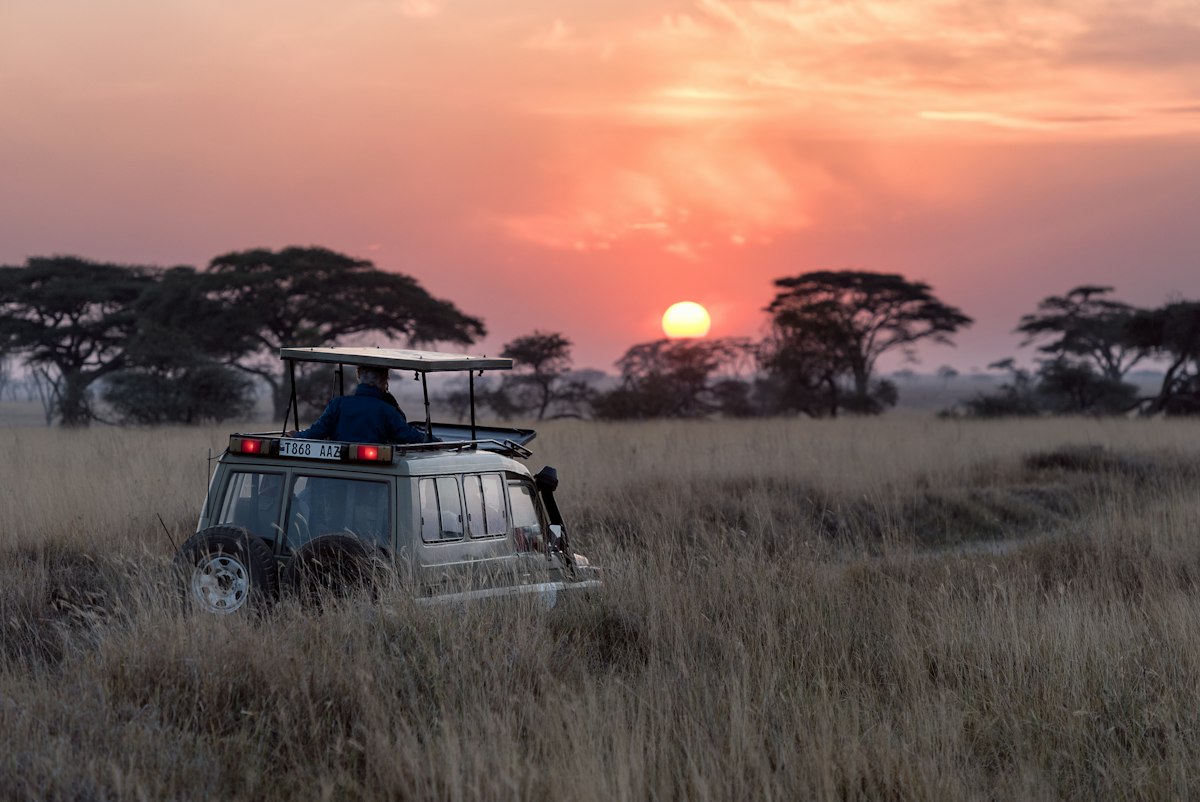
Small, private, impeccably run — the hallmark of true luxury in Tanzania
If there is one single factor that separates a good luxury safari from an exceptional one, it is the guide. Tanzania's top operators invest heavily in their teams, and it shows. The best guides hold advanced qualifications in wildlife ecology, speak multiple languages, and have often spent decades in the same ecosystem — which means they don't just know where the animals are. They know why they're there, what they're likely to do next, and what the behaviour you're watching tells you about the broader health of the landscape.
Allied to great guiding: private vehicles for each booking (no sharing), flexible daily rhythms (sleep in, or head out before dawn — your call), and the kind of attentive, unobtrusive hospitality that makes you feel cared for without ever feeling watched. These are the markers of serious luxury operations, and they're worth every penny of the premium they command.
Tanzania is vast — roughly twice the size of California — and its ecosystems range from open savannah to dense woodland, volcanic highlands to coastal forest. No single itinerary covers everything, so understanding the character of each destination is essential to building the right trip.
There is simply nowhere else on Earth quite like the Serengeti. This 14,750-square-kilometre ecosystem hosts the largest terrestrial mammal migration on the planet: 1.5 million wildebeest, accompanied by hundreds of thousands of zebra and gazelle, moving in an endless seasonal loop in search of rain-fed grass. The Great Migration is one of those rare natural phenomena that genuinely exceeds the hype.
The Great Migration — 1.5 million wildebeest moving in an endless seasonal loop
"The Great Migration is one of those rare natural phenomena that genuinely exceeds the hype."
For luxury travellers, the key is positioning. The Serengeti is not one place but several ecosystems in one, and where you stay should be determined by when you're going. The southern Serengeti hosts the calving season from January to March. The central plains offer year-round big cat territory. The northern Serengeti is where the dramatic Mara River crossings happen between July and October. The best luxury choice is a private mobile camp that repositions with the migration. Book early: the finest options fill twelve to eighteen months in advance.
Formed by the collapse of a volcanic caldera roughly two to three million years ago, the Ngorongoro Crater is one of the most extraordinary enclosed ecosystems on Earth. Its 260-square-kilometre floor supports an astonishing density of wildlife — lions, elephants, hippos, flamingos, hyenas, and critically, one of the last remaining populations of black rhino in East Africa.

The Ngorongoro Crater — a self-contained world spanning 260 square kilometres
The crater rewards early arrival. Dawn on the crater floor, with mist still clinging to the walls and the light turning golden across the grassland, is one of those images that stays with you permanently. Luxury lodges perched on the rim offer dramatic views into the caldera, and the sense of looking down into a self-contained world never quite loses its power.
If the northern circuit is Tanzania's face, the south is its soul. Ruaha National Park — Tanzania's largest — and the vast Nyerere National Park together protect an area of wilderness larger than the United Kingdom. Visitor numbers are a fraction of the north, infrastructure is deliberately minimal, and the wildlife includes substantial populations of wild dogs, lions, leopards, crocodiles, and hippos.
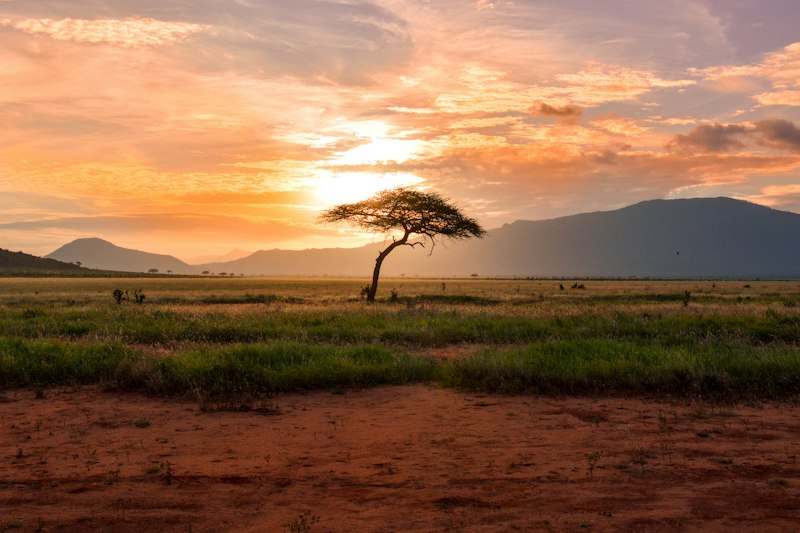
On foot in the bush — a perspective no vehicle can replicate

Elephants and baobabs in Tarangire National Park
Walking safaris — led by armed guides with the skills and composure to navigate you through the bush on foot — are a genuine highlight here. Boat safaris along the Rufiji River in Nyerere are equally extraordinary: drifting silently past sleeping crocodiles and bathing elephants while egrets pick insects from the water's surface.
No luxury Tanzania itinerary is complete without at least a few nights on Zanzibar. The island lies forty miles off the Tanzanian coast — a layered, fragrant, historically rich place where Arabic, Indian, African, and Portuguese cultures have been interweaving for centuries. The transition from safari to beach — from red dust to white sand, from predawn starts to late breakfasts watching dhows cross the channel — is one of travel's most satisfying contrasts. Give it at least three nights, ideally five.
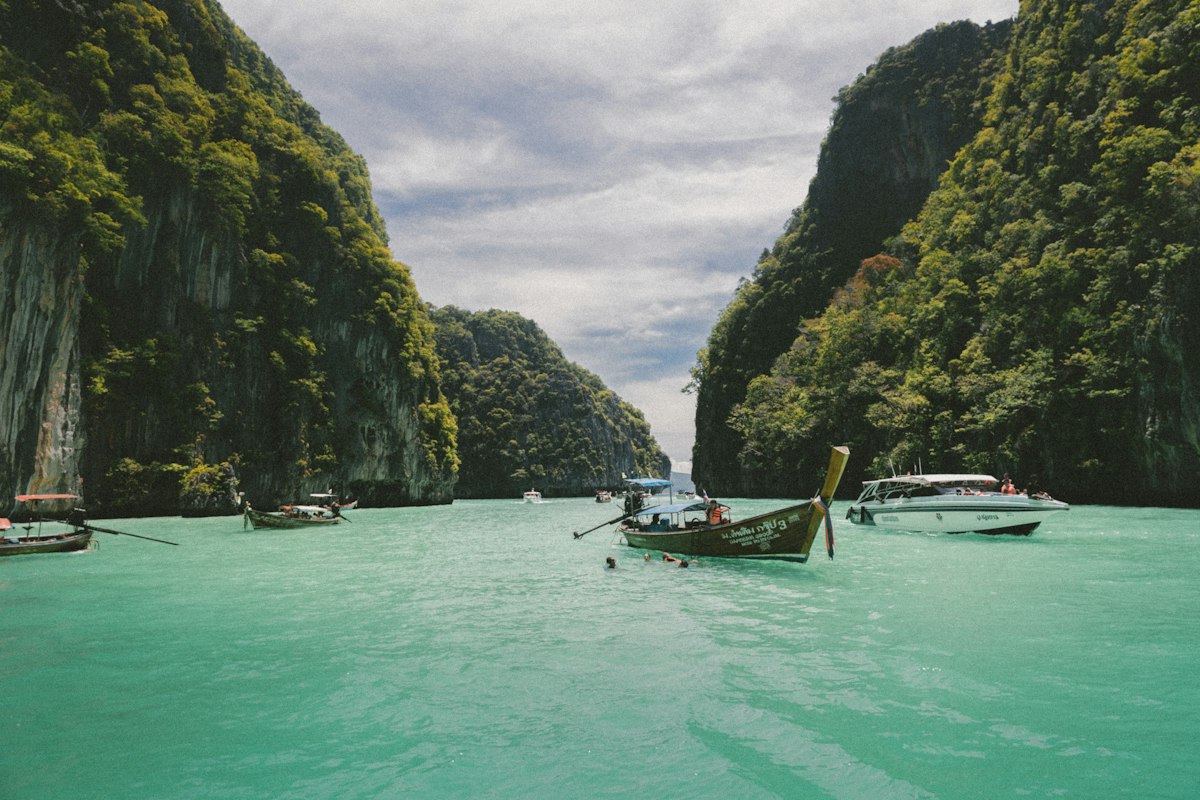
Zanzibar's Indian Ocean coast — the perfect counterpoint to the red dust of the bush
Every transition between camps should be by light aircraft. Tanzania's internal charter flight network is excellent, and flying between destinations saves hours of overland travel while opening access to remote areas unreachable by road. Treat internal flights not as an optional upgrade but as a fundamental part of the luxury experience.

Bush flying between camps — fast, spectacular, and essential to a well-crafted itinerary
The dry season is Tanzania's most popular time to travel, and for good reason. Vegetation thins dramatically, making animals far easier to spot. Waterholes become critical gathering points, concentrating predators and prey in photogenic abundance. In the Serengeti, July through August is prime time for the river crossings. Book twelve to eighteen months ahead for the best camps during this window.

A private game drive at golden hour — the luxury of stopping as long as you please
Tanzania's green season is one of the best-kept secrets in luxury travel. The landscape turns impossibly lush, birdlife explodes, baby animals are everywhere, and rates drop by twenty to thirty percent. The calving season in the southern Serengeti (January to February) is arguably as dramatic as the migration crossings — thousands of wildebeest calves born every day, in a landscape patrolled by cheetah, lion, and hyena.
Tanzania is one of the few travel experiences where using a specialist operator isn't just convenient — it's genuinely transformative. The best safari specialists bring relationships that matter: long-standing access to private conservancies, priority allocations at sought-after camps, and the kind of on-the-ground knowledge that means the difference between a good trip and a perfect one. Look for operators with deep Tanzania specialisation, a commitment to small-group or private travel, and robust sustainability credentials. Names worth researching include Nomad Tanzania, Asilia Africa, &Beyond, and Singita.
Resist the temptation to see everything. The travellers who get the most from their safari are invariably those who commit to fewer destinations and stay longer in each. A minimum of ten to fourteen days is recommended. A well-paced itinerary might look like this: fly into Kilimanjaro International Airport, spend two nights in Tarangire, fly to the Serengeti for three to four nights, transfer to Ngorongoro for two nights, and finish with four to five nights on Zanzibar.
The two main international entry points are Kilimanjaro International Airport (JRO), serving the northern circuit, and Julius Nyerere International Airport in Dar es Salaam (DAR), connecting to the south. Both are served by major hubs including Amsterdam, Doha, Nairobi, and Addis Ababa. Business-class routing makes the overnight flight genuinely comfortable — worth the premium when you're stepping off a plane and directly onto a game drive.
The finest luxury camps in Tanzania are not just beautiful places to stay. They are conservation engines. A private camp generates revenue that funds community livelihoods, anti-poaching operations, and habitat protection — creating economic incentives for wilderness that compete with, and often outperform, the alternatives of agriculture or extraction.
Look for camps with demonstrable commitments: community ownership models, transparent anti-poaching partnerships, renewable energy infrastructure, and meaningful local employment programmes. Asilia Africa's community conservancy partnerships in the northern Serengeti, Nomad Tanzania's long-running conservation programmes in the south, and Singita's Grumeti Fund — which manages over 350,000 acres of habitat in the western Serengeti — are examples of what this model looks like at its best.
Beautifully appointed camps with strong guiding teams, private vehicles, and excellent food and wine. Typically includes all meals, game activities, and park fees. A solid, memorable safari experience with high-quality service throughout.
The finest private camps in exclusive concessions — often eight tents or fewer — with exceptional guiding, the highest levels of personalisation, and the strongest conservation programmes. Private vehicle and guide included as standard. Some properties available for full exclusive buy-out.
A well-constructed 10–14 day luxury itinerary including internal flights and a Zanzibar extension typically runs $15,000–$35,000+ per person. Not always included in headline rates: internal charter flights ($400–$800/leg), gratuities ($15–$20 per person/day), and international airfares.
Neutral tones only — khaki, olive, sand, grey. Avoid blue (attracts tsetse flies) and white (impractical in dust). Pack layers for cold early morning starts; temperatures rise sharply by mid-morning.
Charter flights require soft-sided bags, max 15kg. Most luxury camps offer same-day laundry, so packing light is entirely feasible even for two weeks.
Quality binoculars (8×42 or 10×42) matter more than a camera. For photography, a 100–400mm zoom handles the majority of safari situations beautifully.
Yellow fever certificate required from some countries. Malaria prophylaxis strongly recommended throughout Tanzania. Comprehensive travel insurance including medical evacuation is non-negotiable.
"There is a particular kind of trip — the ones that divide your life into before and after. Tanzania, done properly, is almost always one of them."
Start planning 12–18 months before your intended travel date. Find a specialist you trust, be clear about what matters most to you — solitude, big cats, the migration, walking safaris, a family adventure — and let them build around that. Then go.
Planning a luxury Tanzania safari? The key is starting early, choosing carefully, and trusting the wilderness to do the rest. If you have questions about any of the destinations or camps mentioned here, feel free to reach out — we're always glad to help.


